Shopify sellers
Useful when competitor stores, product angles, and pricing tests are part of your weekly process.
Full Review
Winning Hunter is worth it if product research is a repeated workflow and you use the data to reject weak ideas faster. I would avoid it if you expect guaranteed winners or do not want to verify signals manually.
Quick Verdict
I recommend Winning Hunter for sellers who regularly validate ecommerce products and need faster competitor and ad research.
I would skip it if you are a complete beginner, research rarely, or want a tool that claims to identify guaranteed winners.
Main buying factor: whether it saves enough repeated research time to beat the monthly subscription cost.
Useful when competitor stores, product angles, and pricing tests are part of your weekly process.
Useful when you need to validate demand through ads, stores, social signals, and manual checks.
Useful for building cleaner shortlists and reducing research time across multiple clients or launches.
My Testing Context
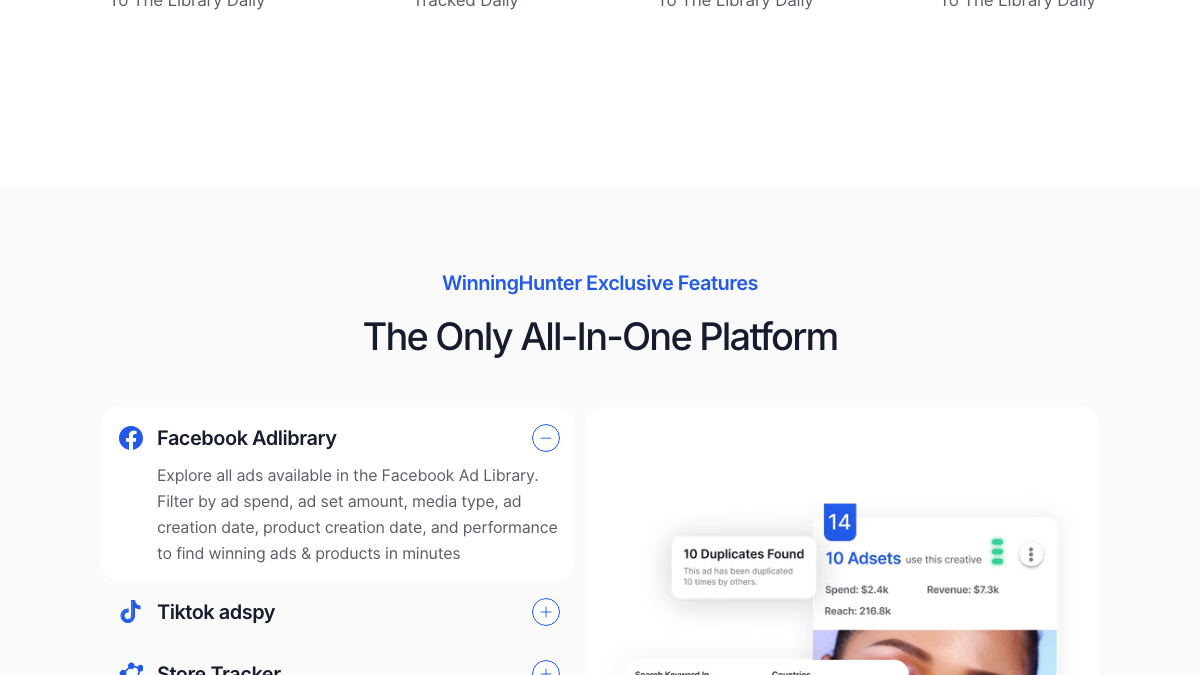
I evaluated Winning Hunter as a product research workflow: finding product ideas, reviewing competitor stores, checking ad activity, and deciding which products deserved manual validation. I also checked official product pages, pricing, API docs, and Trustpilot sentiment.
What Worked
Product shortlisting: It was more useful for reducing a long list than for finding a single magical winner.
Competitor context: Store and ad signals made it easier to see how products were positioned.
Learning curve: The product is approachable for sellers who already understand ecommerce research basics.
Use revenue, sales, and ad signals as clues. Do not treat them as exact performance data.
A product can look promising in a research tool and still be too late or too competitive.
The tool is easier to justify if you repeat research weekly, not when you browse once.
Verified Product Facts
| Verified fact | Why it matters | Buying implication |
|---|---|---|
| Official pages position Winning Hunter around ad research, product discovery, store tracking, trends, and competitor intelligence. | This makes it broader than a single adspy page. | Buy for a validation workflow, not just one feature. |
| Official pricing page listed $49, $79, and $249 monthly plan cards when checked. | The subscription has a meaningful monthly cost. | Do not subscribe unless research is repeated enough to save time. |
| Official API docs describe API and MCP access with metering, API keys, credits, and rate limits. | Automation is real but gated by account access and limits. | Test manually before building an integration. |
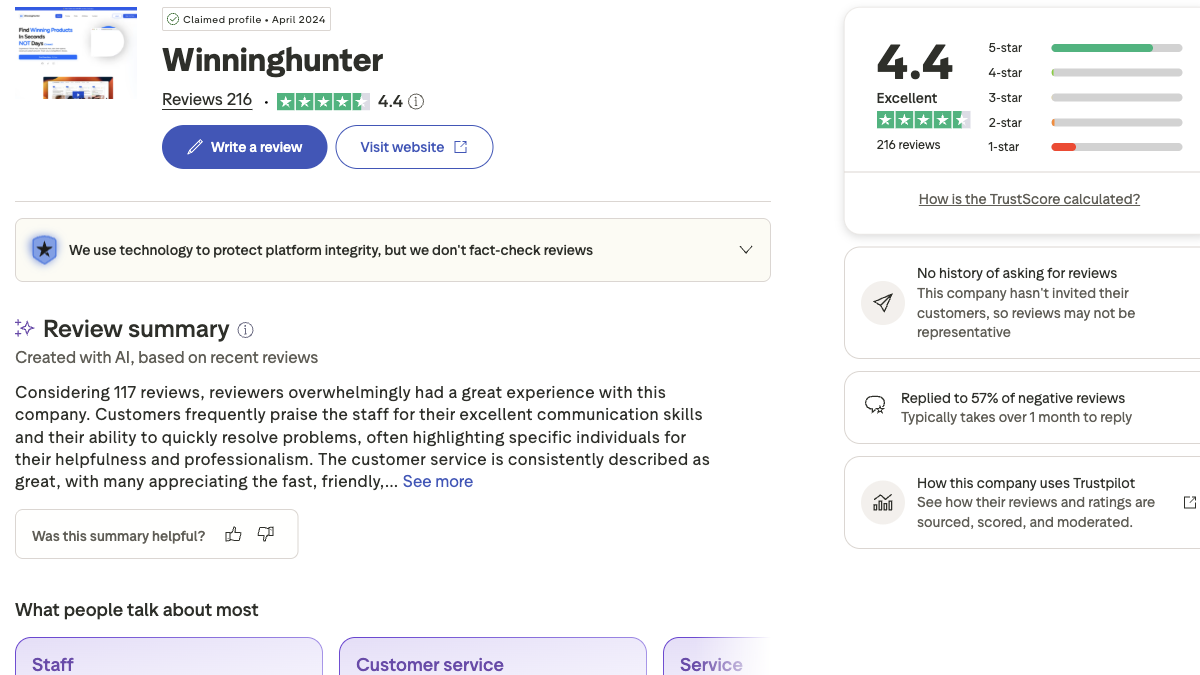
| Trustpilot showed 4.5 out of 5 from 227 reviews when checked. | Outside sentiment is generally positive but includes subscription caution. | Check billing and cancellation before relying on a long subscription. |
The right plan is the smallest plan that can run your real workflow. Do not buy a higher plan for possibility. Upgrade when limits stop a workflow you already repeat.
If the strengths above match your research needs, check Winning Hunter's current offer and access limits. A higher plan only makes sense when it solves a specific constraint.
Read the pricing guide| Alternative | Choose it if | Winning Hunter is better if |
|---|---|---|
| Minea | You mainly need multi-platform ad creative intelligence. | You want broader validation across products, ads, and competitor stores. |
| Dropship.io | You want product and shop tracking with a lower checked entry price. | Competitor research and ad signals are central to the decision. |
| PPSpy | You need deep Shopify store spying and credit-heavy store analysis. | You need product discovery plus ad and competitor context in one workflow. |
Score Basis
| Factor | Score logic |
|---|---|
| Research speed | Strong. It shortens product shortlisting and competitor review. |
| Decision quality | Strong when paired with manual validation. |
| Learning curve | Good for experienced sellers, less useful for complete beginners. |
| Pricing value | Good only when used repeatedly. |
| Limitations | Estimates and signals still require outside checks. |
I recommend Winning Hunter for ecommerce sellers who want to reject weak product opportunities faster and validate competitor activity before spending on ads.
I would skip it if you want a guaranteed winner, rarely research products, or are unwilling to verify data manually.
Start with one workflow, check live pricing, compare at least one alternative, then decide whether the saved time is worth the subscription.
Fact-check note
Fact-check note: Last checked: August 12, 2026
Sources checked:
Plan names, prices, API access, credits, and limits can change. Verify the live official pages before buying or building an integration.
It is worth testing if you research products weekly and need faster validation. It is harder to justify if you only research occasionally or expect guaranteed winners.
It fits Shopify sellers, TikTok Shop operators, dropshippers, agencies, and ecommerce marketers who already know how to interpret product and competitor signals.
Complete beginners, low-frequency sellers, and users who do not want to manually verify trends should probably wait or compare alternatives first.
Winning Hunter can surface useful signals, but sales estimates, ad activity, and trend data still need manual validation before spending on ads or inventory.
The score is based on research speed, competitor context, learning curve, source coverage, pricing value, and the amount of manual validation still required.
Read pricing before subscribing, especially if store tracking limits, API access, billing period, cancellation, or weekly usage volume will affect your decision.
Read alternatives if you mainly need ad creative inspiration, a cheaper tracker, deeper Shopify store analysis, or a more beginner-focused workflow.
Decision
Winning Hunter is worth testing when product research is a repeated weekly task. If you only need one casual research session, check pricing and alternatives before committing.