What worked
Competitor context, ad signals, and store research made it easier to narrow a product shortlist.
Independent Product Hub
A practical review hub for Winning Hunter pricing, workflows, alternatives, features, API notes, and the final buying verdict.
Quick verdict: Winning Hunter is worth testing if you research ecommerce products every week and need faster rejection of weak ideas. Compare alternatives first if you mainly need ad creative inspiration or deep Shopify store spying.
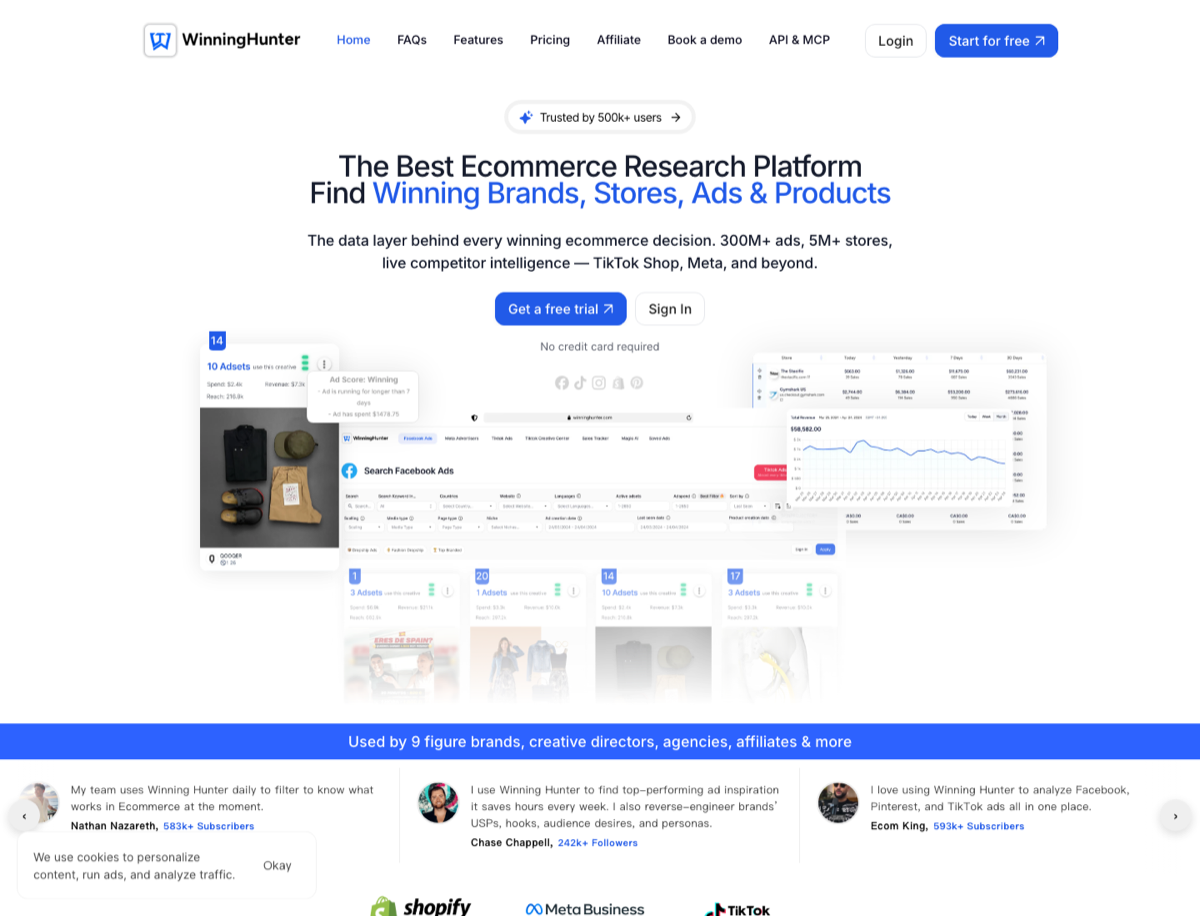
Quick Verdict
Winning Hunter is strongest when you use it as a validation system, not as a product idea vending machine. The buying decision depends on whether it saves enough repeated research time to justify the subscription.
Best fit: Shopify sellers, TikTok Shop operators, dropshippers, agencies, and ecommerce marketers who validate products every week.
Not ideal: complete beginners, one-time researchers, or anyone expecting guaranteed winning products.
My suggested path: read the full review, check live pricing, compare alternatives, then run one workflow before subscribing.
My Experience
The original review focused on whether Winning Hunter helps ecommerce sellers reject bad product ideas faster. I kept that conclusion on the homepage, then moved deeper buying, pricing, API, and workflow details into dedicated pages.
Competitor context, ad signals, and store research made it easier to narrow a product shortlist.
Sales estimates, trend freshness, store quality, and margin assumptions still need independent verification.
The subscription makes sense only when product research is repeated often enough to save meaningful time.
Verified Facts Snapshot
| Fact | Checked source | Decision impact |
|---|---|---|
| Pricing cards | Official pricing page showed Basic $49, Standard $79, and Enterprise $249 per month on August 12, 2026. | Read pricing before subscribing because plan names, discounts, currency, and limits can change. |
| Feature scope | Official pages describe ad research, product discovery, store tracking, trend research, and competitor intelligence. | Use the features page to decide which capability matters to your workflow. |
| API and MCP | Official developer docs say API and MCP are live and document authentication, credits, and rate limits. | Use the API page only after you know the workflow is worth automating. |
| Trustpilot sentiment | Trustpilot sentiment was checked as outside review evidence, not product-performance proof. | Treat reviews as sentiment evidence, not proof of product profitability. |
Start Here
Use the review to decide whether Winning Hunter fits your buyer profile.
Read reviewUse pricing to check live costs, upgrade triggers, API access, and subscription risk.
Check pricingUse alternatives if Minea, Dropship.io, or PPSpy may fit your workflow better.
Compare toolsUse workflow to test whether the tool improves one real research process.
Run workflowPopular Workflow
The most useful workflow is not browsing endlessly. It is turning a niche idea into a smaller list of products worth manual validation.
| Step | What to do | Human check |
|---|---|---|
| Input | Choose a niche, country, price range, and competitor examples. | Reject vague niches before opening any tool. |
| Find signals | Use ad, product, and store signals to build a shortlist. | Do not trust one metric by itself. |
| Validate | Check current ads, store quality, trend freshness, and margins. | Remove products that are already saturated or too thin. |
| Next step | Move serious candidates into your product testing process. | Only subscribe longer if this repeats every week. |
Open Winning Hunter with a niche and a rejection rule. Check whether the available evidence helps you narrow the list before choosing a subscription.
Read the full workflowPricing & Alternatives
Start with the lowest plan that lets you test your real workflow. Upgrade only when limits block repeated research.
Open pricing guideBefore buying, check the free trial guide for entry conditions and account limits.
Compare Minea for ad creative research, Dropship.io for product tracking, and PPSpy for Shopify store analysis.
Open alternativesDetailed Comparisons
Use these if you are choosing between Winning Hunter and one specific tool rather than browsing a general alternatives list.
Best when the decision is broader product validation versus deeper ad creative intelligence.
Compare MineaBest when price sensitivity and product or shop tracking are the main objections.
Compare Dropship.ioBest when Shopify store spying is the core workflow you need to evaluate.
Compare PPSpyCompare TikTok/Facebook discovery, detail credits, and promotional pricing.
Compare PipiadsCompare Meta ad research, audience comments, and affiliate-offer filters.
Compare AdSpyUse Cases and Tutorials
Use these pages when the general workflow is too broad and you already know the platform or research task you need to investigate.
Combine store and product signals before checking offer quality, supplier fit, and margin.
Shopify workflowUse ad and product signals to narrow candidates, then check freshness, shipping, and economics.
TikTok Shop workflowStudy creative patterns and competitor signals without treating one ad as proof of success.
Ad Spy workflowTurn one competitor store into a documented product, offer, and positioning brief.
Follow tutorialTurn a few relevant ads into one original creative hypothesis and a measurable test.
Build a creative briefStart with the review if you want the buying verdict, pricing if you already know the product, alternatives if you are comparing tools, and workflow if you want to see how the product fits research tasks.
No. This is an independent review and product information hub. Use the official website for current account, pricing, billing, and product access details.
No. The homepage keeps the Winning Hunter Review 2026 intent, but the hub also covers pricing, alternatives, workflow, tutorials, features, API notes, and FAQ routing.
Check pricing first if Winning Hunter already looks useful. Check alternatives first if your main concern is cost, ad creative research, Shopify store spying, or product tracking depth.
Workflow shows whether the tool fits a repeated job. If you only need one research session, a subscription is harder to justify than if it saves time every week.
Fact-check note
Fact-check note: Last checked: August 12, 2026
Sources checked:
Plan names, prices, API access, credits, and limits can change. Verify the live official pages before buying or building an integration.
Decision
Use this hub as the starting point if you are deciding whether Winning Hunter is worth testing in 2026. Read the review for the verdict, pricing for plan risk, and workflow before paying for a recurring subscription.